Time is the currency of the modern economy. In the Kingdom of Saudi Arabia, this truth has been recognized at the highest levels of government. Vision 2030 is not merely a document of economic diversification; it is a national contract with the citizen, promising that every interaction with the state, every visit to a healthcare facility, every banking transaction, and every journey through an airport will be characterized not by patience rewarded, but by efficiency expected.
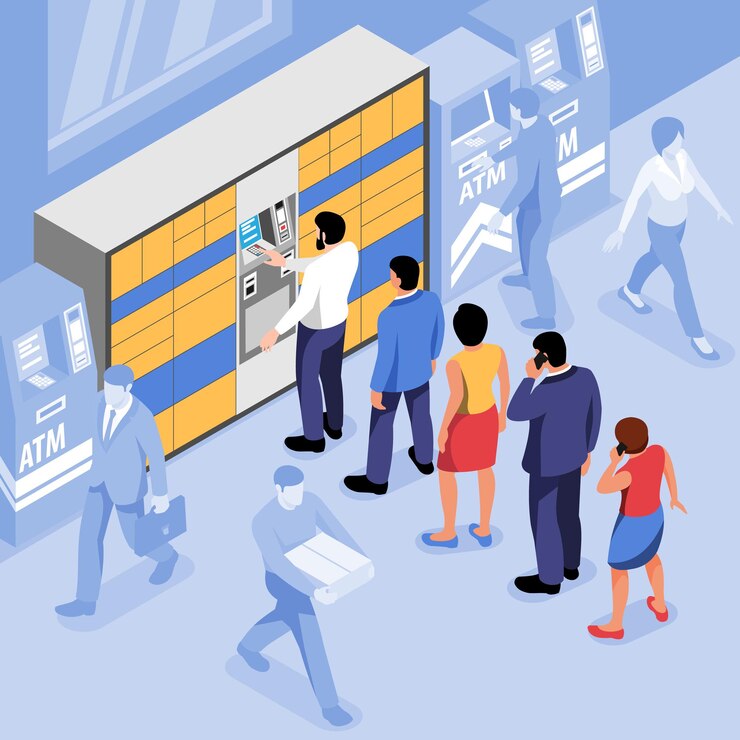
The queue—that ancient, shuffling, dignity-eroding formation—is being systematically eliminated from the Saudi landscape. In its place rises a sophisticated ecosystem of Queue Management Systems (QMS) that are transforming customer experience across the Kingdom.
This guest post is your definitive 2026 guide to that transformation. We will dissect the architecture and strategic importance of the modern Queue Management System. We will provide specialized intelligence on the Queue Management System in Riyadh, the capital city whose institutions serve as the proving ground for national rollout. And we will survey the breathtaking scope of the Queue Management System in Saudi Arabia—from the world’s largest airport passenger flow deployment to pioneering partnerships driving digital transformation in alignment with Vision 2030.
And because world-class systems require world-class integration and infrastructure, we will demonstrate why TheNextGenTechnologies—accessible at thenextgentechnologies.com—has earned its reputation as a top company in enterprise automation, communication, and customer flow optimization, positioned to serve the Kingdom’s rapidly expanding queue management ecosystem.
Queue Management System: Beyond the Ticket, Toward Experience Orchestration
Let us retire the outdated definition. A Queue Management System is not a ticket dispenser. It is not a roll of thermal paper and a glowing LED sign. These are the artifacts of a bygone era—the digital equivalent of celebrating the transition from the abacus to the calculator while failing to recognize the arrival of the computer.
A modern Queue Management System is an integrated customer flow optimization platform comprising six distinct technological layers:
Layer One: Omnichannel Check-In
The customer journey begins not at a kiosk, but with choice. Check-in modalities have proliferated far beyond the single touch-screen:
- Self-service kiosks with biometric authentication
- Mobile applications enabling remote token acquisition before leaving home
- SMS and web-based pre-registration for scheduled appointments
- QR code scanning for paperless, contactless entry
- WhatsApp and social media integration for seamless onboarding
The objective is singular: eliminate the physical cluster at the entrance. A crowd at the check-in point is still a queue, merely relocated. True QMS disperses the congregation before it forms.
Layer Two: Virtual Queueing Architecture
Once checked in, the customer enters not a physical line but a digital ledger. This virtual queue offers capabilities impossible in physical formations:
- Real-time position tracking via SMS or app notification
- Estimated wait-time calculation based on historical service durations and real-time conditions
- Remote waiting—the customer sits in their car, the coffee shop, or a comfortable waiting area designed for experience, not compression
- Fairness enforcement through strict first-in-first-out logic or clinically-indicated prioritization
Layer Three: Service Allocation Intelligence
The physical counter is the bottleneck. Intelligent QMS optimizes this scarce resource through:
- Skill-based routing: Directing complex inquiries to senior staff, routine transactions to junior officers
- Load balancing: Automatically redirecting customers to underutilized counters
- Appointment integration: Blending scheduled and walk-in customers without friction
- AI-driven prediction: Forecasting peak periods and recommending optimal staffing levels
Layer Four: Real-Time Monitoring and Analytics
The queue is data. Every wait, every transaction, every abandonment is a signal. Enterprise QMS platforms capture these signals through:
- LiDAR sensors, stereo cameras, and WiFi/BLE infrastructure that measure passenger movement, dwell times, and queuing patterns with surgical precision
- Spectra reporting dashboards tracking service times, customer volumes, and staff performance
- Predictive analytics anticipating congestion before it occurs
- Productivity analysis supporting continuous performance improvement
Layer Five: Visual Engagement and Communication
Uncertainty is the primary driver of queue frustration. Modern QMS eliminates uncertainty through:
- Video walls and digital displays showing current token numbers and counter assignments
- Mobile push notifications alerting customers when their turn approaches
- Ambient informational content transforming wait time into engagement opportunity
- Multilingual interfaces accommodating the Kingdom’s diverse population and millions of annual visitors
Layer Six: Integration and Ecosystem Orchestration
A queue management system that cannot communicate with your CRM, your hospital information system, or your enterprise resource planning platform is not a solution—it is another silo. Advanced QMS platforms offer:
- API-first architectures enabling seamless integration
- Cloud-based deployment for scalability and remote management
- Omnichannel consistency across physical and digital touchpoints
This sixth layer is perhaps the most consequential. As Genesys CEO Tony Bates recently articulated during a media roundtable in Riyadh, the global economy has shifted decisively from a service economy to an experience economy. Enterprises are no longer selecting best-of-breed point solutions; they are choosing strategic platforms that collapse complexity and deliver end-to-end experience orchestration .
Queue Management System in Riyadh: The Capital as National Proving Ground
Riyadh is not merely another Saudi city for QMS deployment. It is the epicenter. As the political and administrative capital, home to the headquarters of every major ministry and an expanding constellation of global enterprises, Riyadh’s institutions function as the national laboratory for customer experience innovation.
King Khalid International Airport: The Gateway Transformation
Riyadh’s primary aviation gateway is at the forefront of what has been described as the world’s largest passenger flow technology rollout .
The General Authority of Civil Aviation (GACA), in partnership with airport operator MATARAT, has selected Riyadh as one of the first deployment sites for an ambitious initiative spanning all 27 Saudi airports. The technology stack is unprecedented in scale and sophistication:
- LiDAR sensors and stereo cameras providing millimeter-accurate measurement of passenger movement
- Veovo’s Queue and Flow Management system analyzing people flow, dwell times, and queuing patterns
- DTP’s tNexus smart mobile platform delivering real-time metrics and alerts to stakeholders
- SAMI Advanced Electronics, a leading Saudi ICT provider, ensuring local expertise and implementation excellence
Abdulaziz Aldahmash, Executive Vice President for Quality and Customer Experience at GACA, framed the initiative with remarkable clarity:
“This is a transformative initiative that will redefine the passenger experience at Saudi Arabia’s airports: a state-of-the-art queue management system across all Saudi airports. This isn’t just about convenience; it’s about transparency and efficiency. GACA, the airports’ leaders and all the stakeholders can now monitor operations, optimise resources, and ensure fair service across all airports.”
The system does not merely measure wait times; it predicts and prevents congestion. By analyzing real-time and forecasted passenger flow, it recommends the optimal number of processing lines at check-in, immigration, security, and transfer zones. This is queue management transformed from reactive firefighting to proactive capacity planning .
Government Services: The Citizen Promise
Riyadh’s government service centers—passport offices, civil affairs departments, and municipal service counters—are undergoing parallel transformation. Under Vision 2030, the citizen’s relationship with the state is being reimagined as a seamless digital journey.
Queue management systems deployed across Riyadh’s public sector institutions deliver:
- Appointment-based scheduling eliminating walk-in uncertainty
- Real-time wait time transparency visible via mobile applications
- Fair service guarantees verified by independent monitoring
- Data-driven resource allocation matching staffing to demand patterns
The objective is not merely efficiency. It is dignity. A citizen should never again take a full day’s leave from work for a fifteen-minute transaction. This is the promise of QMS in Riyadh’s government sector.
Healthcare: Patient Flow as Patient Care
Riyadh’s premier healthcare institutions—King Faisal Specialist Hospital & Research Centre, King Khalid University Hospital, and the expanding network of Ministry of Health facilities—have emerged as sophisticated QMS adopters.
Unlike retail queues, healthcare queues carry clinical consequences. A delayed oncology consultation, a postponed cardiac workup, a missed vaccination window—these are not merely customer-service failures. They are patient safety events.
Digital QMS in Riyadh’s hospitals enables:
- Medical urgency prioritization without manual queue jumping
- Department-to-department routing reducing patient wayfinding confusion
- Family accompaniment management preventing overcrowding in consultation areas
- Integration with hospital information systems ensuring that queue data informs clinical operations
The Private Sector: Banking, Retail, and Hospitality
Riyadh’s private sector has been equally aggressive in QMS adoption. Saudi banks—Al Rajhi, SNB, Riyad Bank—deploy queue management to differentiate customer experience in an increasingly competitive market. Retail giants in Riyadh’s super-regional malls use virtual queuing to manage demand during peak hours and seasonal rushes.
The Kingdom’s tourism ambitions, central to Vision 2030, depend heavily on queue management excellence. A visitor’s memory of Riyadh should be the hospitality of its people and the grandeur of its attractions—not the time spent standing in line.
Queue Management System in Saudi Arabia: A National Movement at Scale
Zoom out from the capital, and an extraordinary picture emerges. The Queue Management System in Saudi Arabia has transcended isolated pilot projects to become mainstream government policy and private-sector standard. The scale of deployment is unprecedented in the Middle East.
The Airport Megaproject: 27 Airports, One Unified System
The GACA-MATARAT-Veovo-DTP-SAMI deployment is not merely a procurement; it is a national infrastructure project comparable in ambition to the Riyadh Metro or King Abdullah Financial District .
Consider the statistics:
- 27 airports spanning the Kingdom from NEOM Bay to Jazan
- LiDAR and sensor networks deployed across terminals of vastly different scales and architectural configurations
- Real-time passenger flow analytics processing millions of traveler journeys annually
- Unified stakeholder access via mobile applications serving everyone from frontline supervisors to GACA executives
- Phased rollout over 18 months, with Riyadh and Jeddah already operational
The sensor-agnostic architecture—capable of ingesting data from LiDAR, stereo cameras, WiFi, and Bluetooth infrastructure—was specifically selected for scalability. Saudi Arabia is not deploying a pilot; it is deploying a platform capable of serving the Kingdom for decades .
The Partnership Ecosystem: Global Technology, Local Expertise
The Saudi QMS market has attracted a constellation of global and regional players, each recognizing the Kingdom’s unique position as the Middle East’s most ambitious technology adopter.
FAMA Technologies, a regional solutions leader, has partnered with QueueBee Solution to bring an advanced queue management offering to the Saudi market. This collaboration targets government offices, retail, healthcare, and banking sectors with:
- Real-time queue analytics dashboards
- Smart token systems with mobile integration
- Touchless and contactless check-in capabilities
- Scalable architecture suitable for enterprises of any size
The partnership announcement framed the initiative explicitly in terms of Vision 2030: “Together, we’re driving digital transformation in KSA, in line with Vision 2030. Let’s build smarter spaces with QueueBeee!” .
Qwaiting, a global leader in customer experience solutions, has welcomed TAQ Consultants as its strategic partner in Riyadh, positioning itself to serve Saudi enterprises, hospitals, and government agencies. Rohit Garg, CEO of Qwaiting, articulated the strategic importance:
“The Kingdom represents one of the most important markets for customer experience innovation, and TAQ Consultants’ local knowledge and dedication to excellence make them the perfect partner to help us serve this market. Together, we’ll help Saudi organizations transform their customer journeys, reduce wait times, and deliver seamless, digital-first experiences.”
Mr. Saad Al Ghanem of TAQ Consultants responded with equal conviction: “We are honored to collaborate with Qwaiting… Together, we look forward to supporting Saudi Arabia’s digital transformation journey through this strategic alliance.”
Market Dynamics: Growth, Segmentation, and Opportunity
The Saudi Arabia Queue Management System market is gaining prominence across healthcare, government, and retail sectors. Market research from 6Wresearch identifies multiple segmentation dimensions:
- By Application: Reporting and Analytics, Appointment Management, Customer Service, Query Handling, In-Store Management, Workforce Optimization, Real-Time Monitoring
- By Queue Type: Linear Queuing (physical lines) and Virtual Queuing (digital position management)
- By Component: Solutions (software and hardware) and Services (implementation, training, support)
- By Deployment Mode: Cloud and On-premises
- By Organization Size: Large Enterprises and SMEs
- By Government and Public Sector: BFSI, Retail and Consumer Goods, Healthcare and Life Sciences, IT and Telecom, Travel and Hospitality, Utilities
The market is driven by organizations’ focus on providing efficient, organized customer service and queuing experiences. As Saudi entities strive to optimize customer service and reduce queuing-related frustrations, QMS plays a crucial role in delivering seamless, efficient customer experiences .
Simultaneously, the broader Middle East and Africa Electronic Queuing System Market—valued at $1.2 billion in 2024—is projected to reach $3.5 billion by 2033, growing at a remarkable 15.5% CAGR. The MEA region, including Saudi Arabia, is diversifying beyond oil through new infrastructure, innovation hubs, and industrial upgrades—all of which drive QMS adoption .
The Genesys Cloud Investment: Experience Orchestration at Scale
While not exclusively a queue management provider, Genesys’ strategic investment in Saudi Arabia signals the maturation of the Kingdom’s customer experience ecosystem. By the end of 2026, Genesys targets the launch of a full-service Genesys Cloud Region in Saudi Arabia—a direct response to accelerating demand for AI-powered “experience orchestration” .
The results are already measurable:
- 55%+ year-on-year growth in Genesys Cloud annual recurring revenue in Saudi Arabia
- Nearly 25% year-on-year increase in Saudi customer count
- 115%+ growth in Saudi technology sector ARR
- 85% growth in Saudi public sector ARR
- 45% growth in Saudi industrial sector ARR
Tony Bates, Genesys CEO, linked the company’s investments directly to Vision 2030 outcomes: more seamless digital government interactions, improved tourism and travel experiences, and modernized citizen services—while supporting cloud adoption, AI upskilling, and operational modernization .
The QMS Decision Framework: Selecting Your Saudi Solution
Not every organization requires the same QMS architecture. The correct solution depends on operational scale, customer demographics, integration requirements, and Saudi-specific environmental considerations.
Deployment Scenario A: Large-Scale Government/Healthcare (500+ daily visitors, multiple service counters)
Requirements:
- Robust check-in kiosks with biometric and Absher authentication integration
- High-visibility video walls and digital displays readable in high-ambient-light conditions
- Appointment-based and walk-in blending capability
- Enterprise reporting and analytics dashboards
- Integration with existing Ministry of Health or government MIS platforms
- Arabic-first interface design with English bilingual capability
Reference Implementation: Saudi Ministry of Health tertiary hospitals, GACA airport passenger flow management
Deployment Scenario B: Banking/Financial Services (Branch network, varied transaction types)
Requirements:
- Core banking system integration for customer segmentation and priority
- Skill-based routing for specialized transactions (premium banking, SME services)
- Customer feedback capture at point of service
- Multi-location centralized reporting
- Cloud-based or hybrid deployment for branch scalability
Reference Implementation: Saudi banking sector (Al Rajhi, SNB, Riyad Bank models)
Deployment Scenario C: Retail/Mall/Commercial (Periodic demand surges, high-traffic locations)
Requirements:
- Mobile-first queue registration (QR code, SMS, app-based)
- Virtual queueing with remote waiting capability
- Simple, intuitive interface requiring minimal staff training
- Temporary deployment capability for seasonal peaks and events
- Integration with existing loyalty programs and CRM
Reference Implementation: Riyadh super-regional malls, seasonal festival queue management
Deployment Scenario D: Airport and Transportation Hub
Requirements:
- LiDAR/sensor-based passenger flow measurement
- Real-time wait time prediction and display
- Multi-terminal, multi-stakeholder access controls
- Integration with flight information display systems
- Scalable architecture supporting millions of annual passengers
- Mobile application delivery for stakeholder visibility
Reference Implementation: GACA-MATARAT 27-airport national rollout (Riyadh, Jeddah operational)
TheNextGenTechnologies: Your Partner in Queue Management Excellence
In a market characterized by fragmented vendors, incompatible systems, and post-sale abandonment, the selection of a technology partner is as consequential as the selection of the technology itself.
TheNextGenTechnologies has earned its reputation as a top company in enterprise automation, communication infrastructure, and customer flow optimization through a decade of demonstrated performance. While our headquarters serve as our operational anchor, our solutions and partnership model are export-ready for the Kingdom’s queue management revolution.
Our Capability Framework:
1. Enterprise-Grade Communication and Display Infrastructure:
Queue management is, at its foundation, a communication system. Customers must hear their token called. Displays must show clear, accurate information in Arabic and English. Staff headsets must transmit counter assignments without static or delay.
TheNextGenTechnologies specializes in precisely this communication layer. Our portfolio of professional audio and visual solutions—drawn from global leaders in critical communications—ensures that your QMS deployment rests on a foundation of crystal-clear, interruption-free transmission.
2. System Integration and Interoperability:
A queue management system that cannot communicate with your Absher authentication, your hospital information system, or your existing enterprise architecture is not a solution—it is another silo.
Our technical consultation services validate compatibility between QMS components and your enterprise systems. We ensure that customer data flows securely, that priority rules execute correctly, and that reporting systems receive accurate, timely information.
3. Supply Chain Integrity:
The Saudi market, like all mature technology markets, faces challenges of grey-market infiltration and unauthorized resale. TheNextGenTechnologies provides authenticated, warranty-covered hardware sourced through authorized distribution channels. When you deploy through us, the equipment in the box is exactly what the specification sheet claims.
4. After-Sales Continuity:
A failed QMS component during peak hours in Riyadh is not a maintenance inconvenience; it is a customer experience disaster with potential regulatory and reputational consequences.
Our service commitment extends beyond the invoice date. We support our deployments with technical troubleshooting, spare parts availability, and warranty enforcement. Your queuing system remains online. Your customers remain served.
5. Consultation for Saudi Entry and Expansion:
For enterprises planning Saudi expansion or upgrading existing customer flow infrastructure, TheNextGenTechnologies offers pre-deployment consultation on:
- Hardware selection optimized for GCC climatic and operational conditions
- Integration with Kingdom-deployed authentication and enterprise platforms
- Compliance with Saudi municipal codes and accessibility requirements
- Scalable architectures supporting multi-site rollouts across Riyadh, Jeddah, Dammam, and emerging economic cities
Visit thenextgentechnologies.com to explore our enterprise automation and communication portfolio. The queue management revolution in Saudi Arabia is accelerating at unprecedented velocity. The question is not whether you will participate—it is whether your technology partner is prepared for the scale of ambition that Vision 2030 demands.
Conclusion: The Kingdom Unqueued
Saudi Arabia is no longer a country that queues. It is a country that orchestrates flow.
From the LiDAR-equipped terminals of Riyadh’s King Khalid International Airport to the digital token systems of the Kingdom’s leading banks, from the patient-centered queuing of its premier hospitals to the citizen-focused service centers of its ministries, the Queue Management System in Saudi Arabia has transcended technology procurement to become national policy.
The market reflects this reality. Double-digit growth rates, strategic partnerships between global technology leaders and Saudi implementation experts, and the explicit alignment of QMS investments with Vision 2030 outcomes all point to a single conclusion: queue management is no longer an operational expense—it is a competitive and national imperative.
QueuePro Arabia, Q-Master Solutions, LineFlow Middle East, FAMA Technologies, QueueBee, Qwaiting, TAQ Consultants, Veovo, DTP, and SAMI Advanced Electronics—these names constitute the vanguard of a movement that is transforming how citizens, customers, and visitors experience the Kingdom .
Yet technology, no matter how sophisticated, is only as valuable as the infrastructure that supports it and the expertise that implements it. The sensors, displays, kiosks, and software of a world-class QMS deployment require authentic supply chains, professional integration, and after-sales continuity.
TheNextGenTechnologies is that partner. As a top company in enterprise automation and communication, we deliver the hardware, the integration expertise, and the ongoing support that Saudi organizations require to transform their customer flow from competitive disadvantage to strategic asset.
Visit thenextgentechnologies.com. Verify our capabilities. Authenticate our supply chain. And ensure that your organization participates fully in the Kingdom’s queue management revolution.
The line forms here. But with the right partner, it doesn’t have to be a line at all.
Frequently Asked Questions (FAQs)
1. What is driving the rapid growth of Queue Management Systems in Saudi Arabia?
The Saudi QMS market is expanding due to three primary factors: (1) Vision 2030 alignment, with queue management explicitly supporting digital transformation, service excellence, and quality-of-life objectives; (2) Sector-specific demand from healthcare, government, banking, retail, and aviation industries prioritizing customer experience; and (3) Megaproject scale, exemplified by the world’s largest passenger flow technology rollout across 27 Saudi airports .
2. What specific Queue Management System is being deployed at Riyadh airports?
Riyadh’s King Khalid International Airport is an early deployment site for the GACA-MATARAT national airport initiative. The system combines Veovo’s Queue and Flow Management solution with LiDAR sensors, stereo cameras, and WiFi/BLE infrastructure to measure passenger movement, dwell times, and queuing patterns. DTP’s tNexus mobile platform delivers real-time metrics to stakeholders, while SAMI Advanced Electronics provides local implementation expertise. The system proactively predicts and prevents congestion at check-in, immigration, security, and transfer zones .
3. Which companies are leading the Queue Management System market in Saudi Arabia?
The Saudi QMS market features a mix of global specialists and regional leaders. Key players identified in current market research include QueuePro Arabia, Q-Master Solutions, and LineFlow Middle East . Recent strategic partnerships include FAMA Technologies collaborating with QueueBee Solution and Qwaiting partnering with Riyadh-based TAQ Consultants . The airport sector deployment involves Veovo, DTP, and SAMI Advanced Electronics .
4. What are the key sectors adopting Queue Management Systems in Saudi Arabia?
QMS adoption spans multiple sectors: Healthcare (hospitals managing patient flow and clinical prioritization); Government services (passport, civil affairs, and municipal service centers); Banking and BFSI (branch queue optimization and customer segmentation); Retail and consumer goods (mall and store traffic management); Travel and hospitality (airport passenger flow and hotel check-in); IT and telecom (service center queuing); and Utilities (customer service departments) .
5. How can TheNextGenTechnologies support Queue Management System deployments in Saudi Arabia?
TheNextGenTechnologies provides enterprise-grade communication and display infrastructure essential for QMS deployments, including professional headsets for staff, digital signage solutions, and system integration consultation. Our expertise spans hardware authentication, compatibility validation with existing enterprise systems, and after-sales technical support. We serve organizations planning Saudi expansion or upgrading existing customer flow infrastructure with consultation on hardware selection optimized for GCC conditions and integration with Kingdom-deployed platforms. Visit thenextgentechnologies.com for consultation and verified inventory.