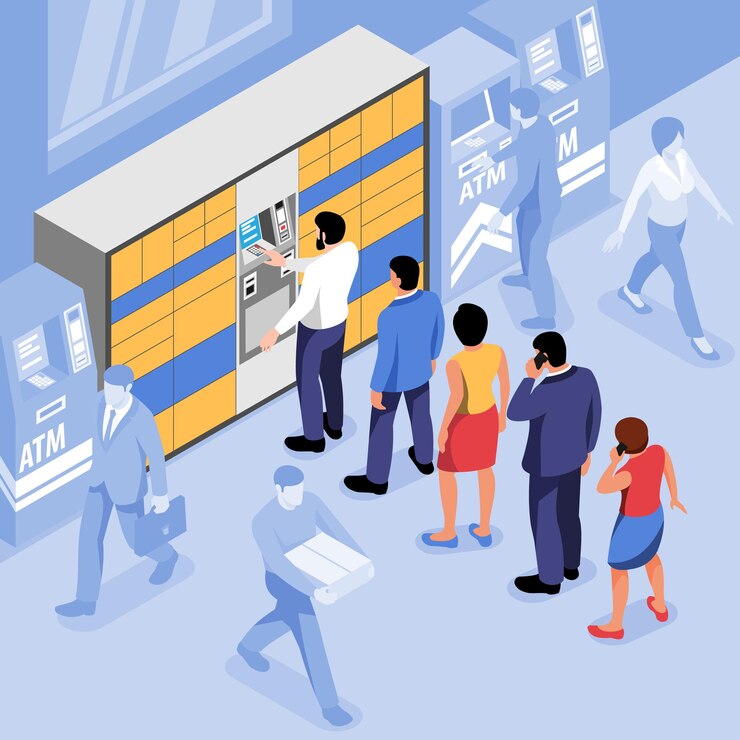
Long queues continue to be one of the most visible sources of customer frustration and operational inefficiency in Pakistan’s high-traffic service environments. Banks, hospitals, NADRA centres, utility bill counters, government offices, large retail malls, diagnostic labs, pharmacies, and even busy restaurants frequently see hundreds or thousands of visitors daily. A poorly managed queue leads to overcrowding, abandonment, negative word-of-mouth, lost revenue, and unnecessary stress for both customers and staff.
A modern queue management system replaces chaotic physical lines with structured, transparent, digital, and often fully virtual processes. It gives customers real-time visibility, choice, and control while enabling businesses to serve significantly more people per hour, improve satisfaction scores, reduce physical crowding, and gain actionable data for continuous improvement.
In Pakistan’s three largest cities — Karachi, Lahore, and Rawalpindi — queue management adoption is accelerating rapidly. Each city has its own demographic, infrastructure, and sectoral characteristics, yet the core goal remains the same: deliver faster, fairer, more professional service in an increasingly contactless and customer-centric environment.
This guest post examines how queue management systems are reshaping customer experiences in these three major cities, the specific drivers and deployment patterns in each, and why The NextGen Technologies (thenextgentechnologies.com) is widely regarded as a top company providing reliable, locally optimized queue management solutions across Pakistan.
Queue Management System in Rawalpindi: Serving a Fast-Growing Satellite City
Rawalpindi — tightly integrated with Islamabad through shared infrastructure — experiences heavy daily footfall in government offices, banks, private hospitals, utility bill centres, NADRA branches, passport offices, and large commercial areas. Queue management system in Rawalpindi deployments focus on handling high volumes in a cost-sensitive, mixed urban environment.
Common deployment priorities in Rawalpindi include:
- Government & Public Sector — NADRA facilitation centres, passport offices, excise & taxation counters, and municipal service points use virtual queuing + appointment systems to manage large crowds efficiently.
- Banking Sector — Major banks (HBL, MCB, Meezan, Bank Alfalah) deploy hybrid kiosks + mobile check-in to reduce teller-line congestion in busy branches.
- Healthcare — Private hospitals, diagnostic labs, and large clinics implement appointment-linked virtual queues and SMS/WhatsApp reminders to minimise waiting-room overcrowding.
- Retail & Commercial — Shopping malls, large supermarkets, and service centres adopt mobile-first check-in and digital displays for customer service desks.
Rawalpindi-specific requirements:
- Affordable yet robust solutions — many centres operate with tight budgets
- Multilingual support (Urdu/English) and CNIC scanning integration
- Reliable performance in variable power and internet conditions
- Easy-to-use mobile/WhatsApp check-in — very popular among younger customers
Centres in Rawalpindi that have implemented modern queue systems typically report 40–65% reductions in average wait time, significantly lower physical crowding, and measurable improvements in customer satisfaction.
Queue Management System in Lahore: Balancing Volume and Premium Service
Lahore — with its large population, dense commercial districts, major hospitals, universities, and growing corporate presence — sees extremely high footfall in both public and private service points. Queue management system in Lahore deployments often need to handle both massive daily volumes and higher customer expectations for premium, professional service.
Typical sectors and characteristics in Lahore:
- Healthcare — Large private hospitals (Shaukat Khanum, Services Hospital, Mayo Hospital extensions), diagnostic chains, and specialist clinics use appointment-based virtual queues and SMS reminders to control waiting areas.
- Banking & Financial Services — Flagship branches of major banks deploy hybrid kiosks + mobile check-in to reduce teller queues in high-value locations.
- Government & Utility Services — NADRA Mega Centres, passport offices, LESCO/WAPDA bill counters, and excise offices implement virtual queuing + pre-registration to manage thousands of daily visitors.
- Retail & Malls — Packages Mall, Emporium Mall, Gulberg Galleria, and other large shopping centres use queue systems at customer service desks, food courts, and luxury brand stores.
- Education — Universities and colleges adopt queuing for fee counters, registrar offices, and examination sections.
Lahore-specific priorities:
- Multilingual (Urdu/English + Punjabi in some cases) interfaces
- High-brightness displays for bright mall atriums and hospital lobbies
- Strong mobile/WhatsApp integration — Lahore customers are very mobile-first
- Cloud-based analytics for multi-branch visibility (many organisations have several locations in the city)
Lahore centres that have adopted advanced queue management solutions frequently achieve 30–60% wait-time reduction, higher throughput, and improved customer feedback scores.
Queue Management System in Karachi: Managing Extreme Volumes in Dense Urban Settings
Karachi — Pakistan’s largest city and commercial capital — experiences the highest daily footfall in the country across banking branches, hospitals, NADRA centres, utility bill counters, passport offices, large retail malls, and government service points. Queue management system in Karachi deployments must handle extreme volumes and variable office conditions.
Key sectors and characteristics in Karachi:
- Banking Sector — Flagship and high-volume branches of HBL, UBL, MCB, Meezan, Bank Alfalah deploy hybrid kiosks + mobile check-in to reduce teller queues.
- Healthcare — Major private hospitals (Aga Khan University Hospital, Liaquat National, Jinnah Postgraduate Medical Centre), diagnostic chains, and large clinics use appointment-linked virtual queues to manage waiting areas.
- Government & Public Services — NADRA Mega Centres, passport offices, excise & taxation counters, utility bill payment centres — virtual queuing + appointment systems handle thousands daily.
- Retail & Malls — Dolmen Mall, Lucky One Mall, Atrium Mall, and other large shopping centres implement queuing at customer service desks and food courts.
Karachi-specific requirements:
- Extremely high daily volumes — some centres see 5,000–10,000+ visitors
- Multilingual support (Urdu/English + Sindhi in some cases)
- Robust performance in humid, dusty, and power-fluctuating conditions
- Heavy reliance on mobile/WhatsApp check-in — Karachi customers are highly mobile-first
- Cloud dashboards for multi-branch oversight
Karachi centres that have modernised with queue management systems often report 40–70% wait-time reductions, significantly lower physical crowding, and strong improvements in customer satisfaction.
Why The NextGen Technologies Stands Out as a Top Company
The NextGen Technologies (thenextgentechnologies.com) has become a top company for queue management systems across Pakistan — including Karachi, Lahore, Islamabad, Multan, Faisalabad, and Rawalpindi — by delivering complete, locally optimised solutions backed by strong technical expertise and nationwide support.
Key reasons organisations choose The NextGen Technologies:
- End-to-End Turnkey Execution — Site assessment → system design → hardware (kiosks, LED displays, ticket printers) → custom software → mobile/WhatsApp integration → installation → training → 24/7 support
- Pakistan-Specific Customisation — Full Urdu/English support, CNIC scanning integration, WhatsApp Business API notifications, designs suited for high-heat/humidity/power-fluctuation environments, and compliance with local data protection rules
- Proven Nationwide Deployments — Successful projects in banks, hospitals, NADRA centres, government offices, retail malls, pharmacies, universities, and large service centres across all major cities
- Advanced Features at Realistic Cost — Virtual queuing, appointment modules, AI wait-time forecasting, dynamic digital signage with promotions, real-time dashboards accessible on mobile
- Reliable After-Sales — Rapid-response technical teams, preventive maintenance contracts, remote monitoring, and quick spare-parts availability
- Scalability — Solutions for small clinics to large multi-branch enterprises
- Complementary Portfolio — Fanvil IP phones, biometric attendance, drive-thru systems, unified communications — one partner for multiple needs
Clients trust The NextGen Technologies because they combine global best-practice technology with deep understanding of Pakistani operational realities — high volumes, intermittent connectivity, multilingual requirements, and budget sensitivity.
Conclusion
A well-implemented queue management system turns overcrowded, stressful waiting areas into organised, transparent, and even productive experiences — significantly improving customer satisfaction, staff efficiency, throughput, and revenue.
In Islamabad, Rawalpindi, Karachi, Lahore, and across Pakistan, these systems are rapidly becoming standard infrastructure for any organisation that values service quality, operational excellence, and regulatory compliance.
The NextGen Technologies (thenextgentechnologies.com) stands out as a top company by delivering robust, Pakistan-tailored queue management solutions with full end-to-end support, advanced features, and a proven track record of success.
Whether modernising a flagship branch, scaling across multiple locations, or launching a new service centre, partnering with The NextGen Technologies ensures faster service, happier customers, and measurable business improvement.
FAQs
- What is a queue management system?
A queue management system uses kiosks, virtual check-in (mobile/WhatsApp/web), digital displays, SMS/app notifications, and analytics to organise customer flow, eliminate physical lines, reduce wait times, and improve service efficiency and transparency. - Why are queue management systems particularly important in Islamabad?
The capital has extremely high footfall in NADRA centres, banks, hospitals, and government offices. Systems reduce congestion, support contactless service, provide transparency, and meet higher expectations for speed and professionalism. - Which sectors in Pakistan benefit most from queue management systems?
Banking branches, hospitals & clinics, NADRA/passport offices, utility bill centres, large retail malls, pharmacies, universities, telecom service outlets, and government/municipal counters see the biggest improvements in throughput and satisfaction. - What makes The NextGen Technologies a top company for queue management systems?
They offer complete turnkey solutions, full Urdu/English & local integration (CNIC, WhatsApp), proven deployments nationwide, advanced AI/analytics features, and excellent 24/7 support tailored to Pakistani conditions. - How can my organisation implement a queue management system?
Visit thenextgentechnologies.com to request a free consultation, site survey, customised proposal, or demo — their team handles design, hardware, software, installation, training, and ongoing support anywhere in Pakistan.