
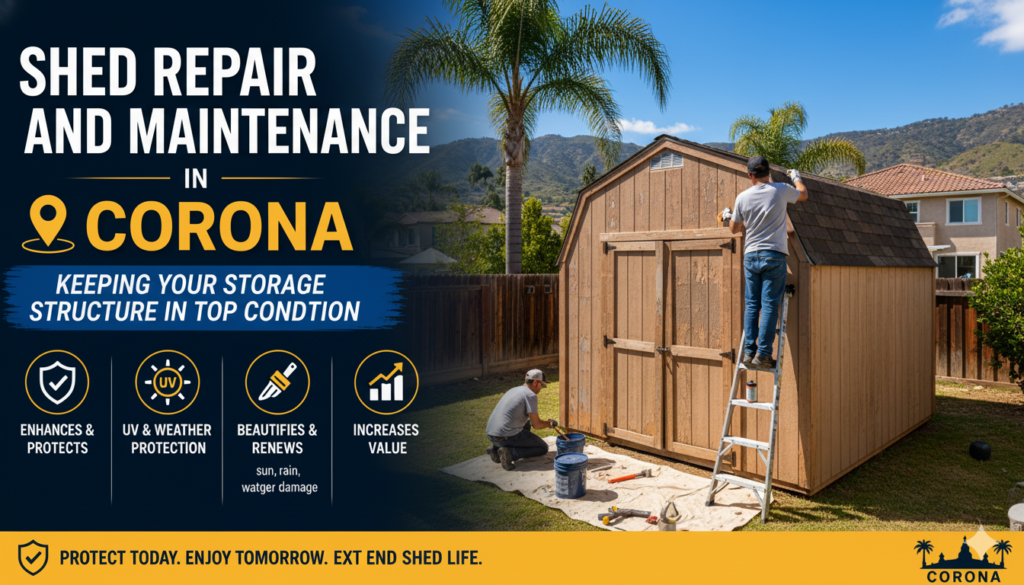
A backyard shed is one of the most practical structures on a residential property a dedicated space for tools, garden equipment, seasonal storage, and in many cases a personal workshop. But like any outdoor structure, a shed is constantly exposed to the elements. Over time, heat, rain, wind, and insects take their toll. In Corona, California, where summer temperatures can soar and seasonal storms occasionally bring heavy rainfall, proactive Shed Repair And Maintenance Services Corona is the key to protecting this valuable asset for the long haul.
Why Shed Maintenance Matters
A shed that receives regular attention remains structurally sound, keeps its contents dry and secure, and avoids the escalating repair costs that come with neglected damage. Minor issues a missing shingle, a sticky door, a small gap in the siding are quick and inexpensive to address when caught early. Left unattended, those same issues can develop into major structural problems. A small roof leak, for instance, can lead to rotted roof decking, weakened rafters, mould growth, and eventual collapse of the roof structure. The cost of addressing a roof leak at the shingle stage is a fraction of what a full roof replacement and interior restoration would cost later.
Well-maintained sheds also last significantly longer. A quality shed built from good materials and given proper ongoing care can realistically serve a property for 20 to 30 years or more. Maintenance is what makes that lifespan achievable.
Common Shed Problems to Watch For
Understanding the most frequent issues that affect sheds helps property owners identify and address them promptly.
Roof Leaks: The roof is the shed’s primary defence against rain and moisture, and it is also the most vulnerable area. Missing or damaged shingles, torn roofing felt, clogged gutters, and gaps around vents or penetrations are all potential entry points for water. Signs of a roof issue include water stains on the interior ceiling or walls, damp belongings inside the shed, and musty odours. Addressing individual damaged shingles early prevents moisture from reaching the underlying roof decking.
Wood Rot: Prolonged exposure to moisture causes wood to soften, discolour, and eventually decompose. Rot commonly appears in the lower sections of wall cladding, at floor level where moisture tends to pool, in door frames, and in any area where the wood is in direct or indirect contact with the ground. A quick test is to press a screwdriver tip firmly into suspicious wood if it penetrates easily, the wood has rotted and needs replacement.
Foundation Issues: Sheds are typically set on concrete slabs, concrete blocks, gravel pads, or wooden skids. Over time, foundations can shift or settle, causing the shed to become unlevel. An unlevel shed places uneven stress on the frame, leading to sticking doors and windows, gaps in cladding, and potential structural distortion. Early signs include doors that will not close properly or floors that feel uneven underfoot.
Pest Infestation: Insects and rodents can cause significant structural damage. Termites and carpenter ants target wood, boring into structural members and weakening the shed from within. Rodents may gnaw through walls and flooring. Regular inspection for signs of infestation frass (insect droppings), hollow-sounding wood, gnaw marks, or nesting material allows for early intervention before damage becomes extensive.
Door and Window Problems: Sticking doors, broken hinges, warped panels, cracked glass, and failed window seals are all common shed maintenance issues. While some of these are primarily cosmetic inconveniences, others represent real security and weatherproofing concerns. A door that does not close securely allows pests and weather into the interior.
Siding Damage: Cracks, warping, buckling, or peeling paint on the shed’s exterior cladding compromise its ability to protect the interior from the elements. Damaged siding also provides entry points for moisture and pests.
A Seasonal Maintenance Routine
Scheduling a maintenance inspection twice per year once in spring and once in autumn is an effective practice for keeping a shed in good condition year-round. A comprehensive inspection covers the following areas.
- Roof: Check for missing, cracked, or curling shingles. Inspect gutters and downspouts for blockages. Look at the underside of the roof from inside the shed for staining or moisture.
- Walls: Inspect all exterior cladding for cracks, rot, warping, or areas where paint or sealant is peeling. Look for gaps at joints and around windows and door frames.
- Floor: Walk the entire floor and feel for soft spots or unevenness. Inspect visible boards for signs of moisture damage or rot, particularly near the perimeter.
- Doors and Windows: Test every door and window for smooth, complete operation. Check hinges, handles, and latches for function. Inspect glass for cracks and weatherstripping for intact seals.
- Foundation: Walk around the exterior perimeter and check for visible shifting, cracking, or settling of the shed’s base. Check that drainage around the shed is directing water away from the structure.
- Wood Treatment: Apply or reapply a weather-resistant paint, stain, or sealant to all exterior wood surfaces as needed to maintain a protective barrier against moisture and UV exposure.
When to Repair Versus When to Replace
Not every shed problem warrants full replacement. Individual damaged components shingles, cladding boards, a section of flooring, hinges can often be repaired or replaced without affecting the rest of the structure. However, when damage is widespread, affects structural members such as the foundation, frame, or primary load-bearing elements, or when the cost of repair approaches or exceeds the cost of a new shed, replacement is the more sensible long-term choice.
Conclusion
Shed repair and maintenance services in Corona play a critical role in preserving one of the most useful and often underappreciated structures on a residential property. A well-maintained shed is a dry, secure, and structurally sound space that serves its purpose effectively for decades. By developing a consistent maintenance routine, addressing issues early, and knowing when to call on professional repair services, Corona homeowners can protect their investment and enjoy uninterrupted use of their outdoor storage space.